



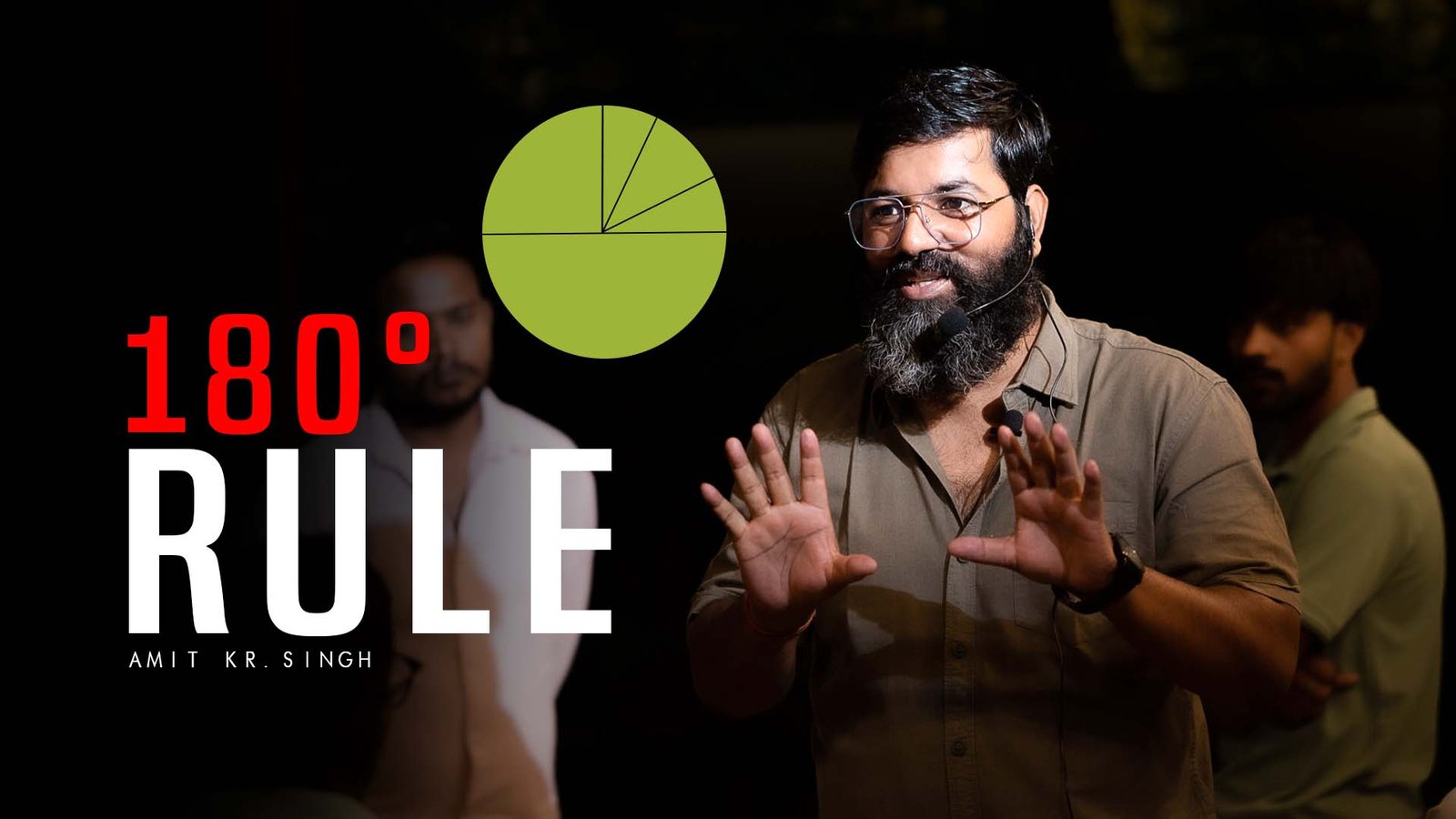
180-Degree Rule in Cinematography filmmaking का एक important camera positioning concept है। यह rule filmmakers को scene में characters, movement और screen direction की continuity maintain करने में मदद करता है।
मान लीजिए दो लोग एक-दूसरे के सामने बात कर रहे हैं। उनके बीच एक imaginary line होती है, जिसे line of action in cinematography कहा जाता है। Camera को इस line के एक side पर रखने से characters की position और eye-line consistent रहती है।
यही basic concept 180 degree rule in cinematography को समझने के लिए जरूरी है।
PIWF Institute में students ऐसे cinematography concepts को सिर्फ theory से नहीं, बल्कि practical camera exercises के through समझते हैं।
180 Degree Rule Filmmaking में क्यों जरूरी है?

180 degree rule filmmaking में visual continuity बनाए रखने के लिए इस्तेमाल किया जाता है।
अगर एक shot में character screen के left side पर है और अगले shot में अचानक right side पर दिखने लगे, तो audience को scene confusing लग सकता है।
इसलिए 180-degree rule in film का इस्तेमाल करते समय filmmaker को camera axis, eye-line और screen direction का ध्यान रखना चाहिए।
यह rule खास तौर पर useful है:
- Dialogue scenes
- Wedding cinematography
- Couple shoots
- Action scenes
- Walking shots
- Running scenes
- Short films
- Music videos
Camera Axis in Cinematography कैसे काम करता है?
Camera axis in cinematography को समझना 180-degree rule का basic part है।
दो characters के बीच एक imaginary line बनाइए। अब camera को उस line के एक side पर रखकर अलग-अलग shots ले सकते हैं।
For example:
- Wide shot
- Medium shot
- Close-up
- Over-the-shoulder shot
- Two-shot
अगर camera same side पर रहता है, तो editing के बाद भी characters की spatial relationship clear रहती है। यही 180 degree rule camera setup का main purpose है।
Line of Action and Screen Direction

Line of action in cinematography केवल dialogue scenes के लिए नहीं होती। यह movement scenes में भी important है।
मान लीजिए bride wedding stage की तरफ left से right चल रही है। अगले shot में अगर वह अचानक right से left चलती दिखाई दे, तो audience को लग सकता है कि bride वापस जा रही है।

इसलिए screen direction in cinematography को maintain करना जरूरी है।
PIWF Institute में students camera positioning के साथ movement और continuity को practical shooting में समझ सकते हैं।
180-Degree Rule Explained with a Simple Example

एक simple scene imagine करें।
Bride और groom आमने-सामने खड़े हैं। उनके बीच imaginary axis है।
पहले एक wide shot लें। फिर bride का close-up और groom का close-up लें।
अगर camera axis के same side पर है, तो bride और groom एक-दूसरे की तरफ देखते हुए दिखाई देंगे।
लेकिन अगर camera बिना planning के opposite side पर चला जाता है, तो eye-line और screen position बदल सकती है।
यही reason है कि 180-degree rule explain करते समय camera side और eye-line को साथ समझना जरूरी है।
Crossing the Line in Filmmaking

Crossing the line in filmmaking का मतलब established axis के opposite side पर camera ले जाना है।
Beginners के लिए यह अक्सर continuity mistake बन जाती है। लेकिन professional filmmaking में line को जानबूझकर भी cross किया जा सकता है।
अगर filmmaker camera movement, wide shot या character movement के जरिए axis change दिखाता है, तो audience को नया camera position समझने में आसानी होती है।
इसलिए पहले 180-Degree Rule in Cinematography को समझना जरूरी है और फिर यह सीखना कि इसे कब creative तरीके से break किया जा सकता है।
180 Degree Rule in Photography और Shutter Rule

180-degree rule in photography और cinematography में इस्तेमाल होने वाले 180-degree rule को लेकर confusion हो सकता है।
Cinematography वाला 180-Degree Rule in Cinematography camera positioning और spatial continuity से जुड़ा है।
वहीं 180-degree shutter rule frame rate, shutter speed और motion blur से जुड़ा अलग concept है।
इसलिए दोनों rules को एक जैसा नहीं समझना चाहिए।
PIWF Institute में 180-Degree Rule सीखें

PIWF Institute, Patna में cinematography learning को practical shooting से जोड़ा जाता है।
Students camera handling, composition, shot sizes, lighting, movement, continuity और storytelling जैसे concepts के साथ 180-Degree Rule in Cinematography को भी practical तरीके से समझ सकते हैं।

यहाँ focus केवल यह याद करने पर नहीं है कि camera कहाँ रखना है। Students को यह समझने की जरूरत होती है कि camera positioning in cinematography story और final edit को कैसे affect करती है।

अगर आप cinematography सीखना चाहते हैं और camera के साथ practical experience लेना चाहते हैं, तो PIWF Institute के cinematography training programme के बारे में जानकारी लें।
180-Degree Rule सीखने के लिए Practical Exercise

इस concept को practise करने के लिए दो people को आमने-सामने खड़ा करें।
उनके बीच imaginary line बनाएं। फिर:
- Wide shot लें।
- दोनों के close-ups लें।
- Over-the-shoulder shots लें।
- सभी shots को edit करें।
- फिर camera को दूसरी side पर ले जाकर वही scene shoot करें।
- दोनों versions को compare करें।
इस exercise से आपको खुद समझ आएगा कि 180-degree rule in cinematography screen direction और continuity को कैसे affect करता है।
Conclusion
180-Degree Rule in Cinematography हर beginner filmmaker और cinematographer के लिए एक useful concept है। यह camera axis, line of action, eye-line और screen direction को समझने में मदद करता है।
अगर आप cinematography को केवल theory से नहीं, बल्कि practical shooting के साथ सीखना चाहते हैं, तो PIWF Institute in Patna में available cinematography training के बारे में जानकारी लें।
PIWF Institute से connect करें और practical cinematography learning की शुरुआत करें।



FAQs
What is the 180 degree rule?
180-Degree Rule in Cinematography एक camera positioning guideline है जो characters और objects के बीच spatial continuity maintain करने में मदद करती है।
Why is the 180-degree rule important?
यह rule audience को characters की position, eye-line और movement direction समझने में मदद करता है।
What is crossing the line in filmmaking?
Crossing the line in filmmaking का मतलब established axis के दूसरी side पर camera ले जाना है।
What is the line of action in cinematography?
यह एक imaginary line है जो characters या main action के बीच relationship और movement direction को define करती है।
Can filmmakers break the 180-degree rule?
हाँ। Filmmaker creative reason के लिए line cross कर सकता है, लेकिन camera position change को audience के लिए clear रखना important है।